

Direct Dial Phone Numbers for B2B Sales: What They Are and When They Help
Direct dial phone numbers help sales teams reach business contacts without getting stuck at generic switchboards. They are useful when they are accurate, fresh, legally usable, and connected to the right CRM workflow.

What direct dial phone numbers are
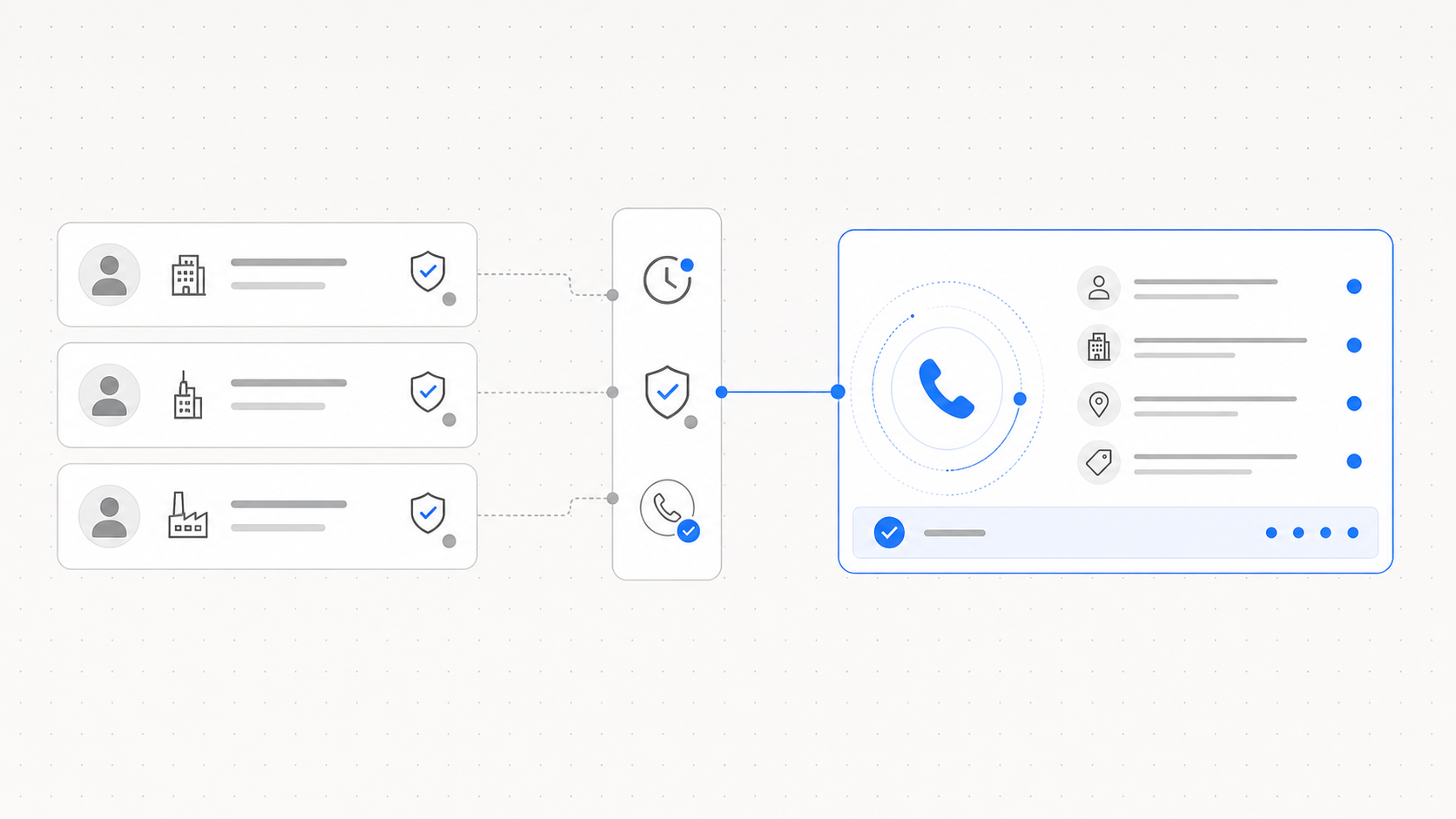
A direct dial phone number is a number that helps a sales team reach a specific business contact or relevant desk more directly than the main company line. In practice, that may be a direct office line, a business mobile number, or a department-level number that avoids the generic switchboard.
The appeal is obvious. If a seller has the right person, the right company, and the right reason to call, a direct number can reduce friction. The problem is that direct dial data is easy to misuse when it is treated as a shortcut instead of a data-quality layer.
Direct dial numbers are not a sales strategy by themselves. They are one part of a contactability system.
When direct dials help
Direct dials help most when a team already knows who they need to reach.
Good use cases include:
- following up with a qualified inbound lead
- reaching a buying committee member after account research
- contacting a decision-maker when email has gone silent
- verifying details for an active opportunity
- routing a time-sensitive conversation to the right person
- filling gaps in incomplete CRM records
They are less useful when the team has no clear account fit, no relevant message, and no reason for the contact to expect outreach. Better data does not fix weak targeting.
The quality checks that matter
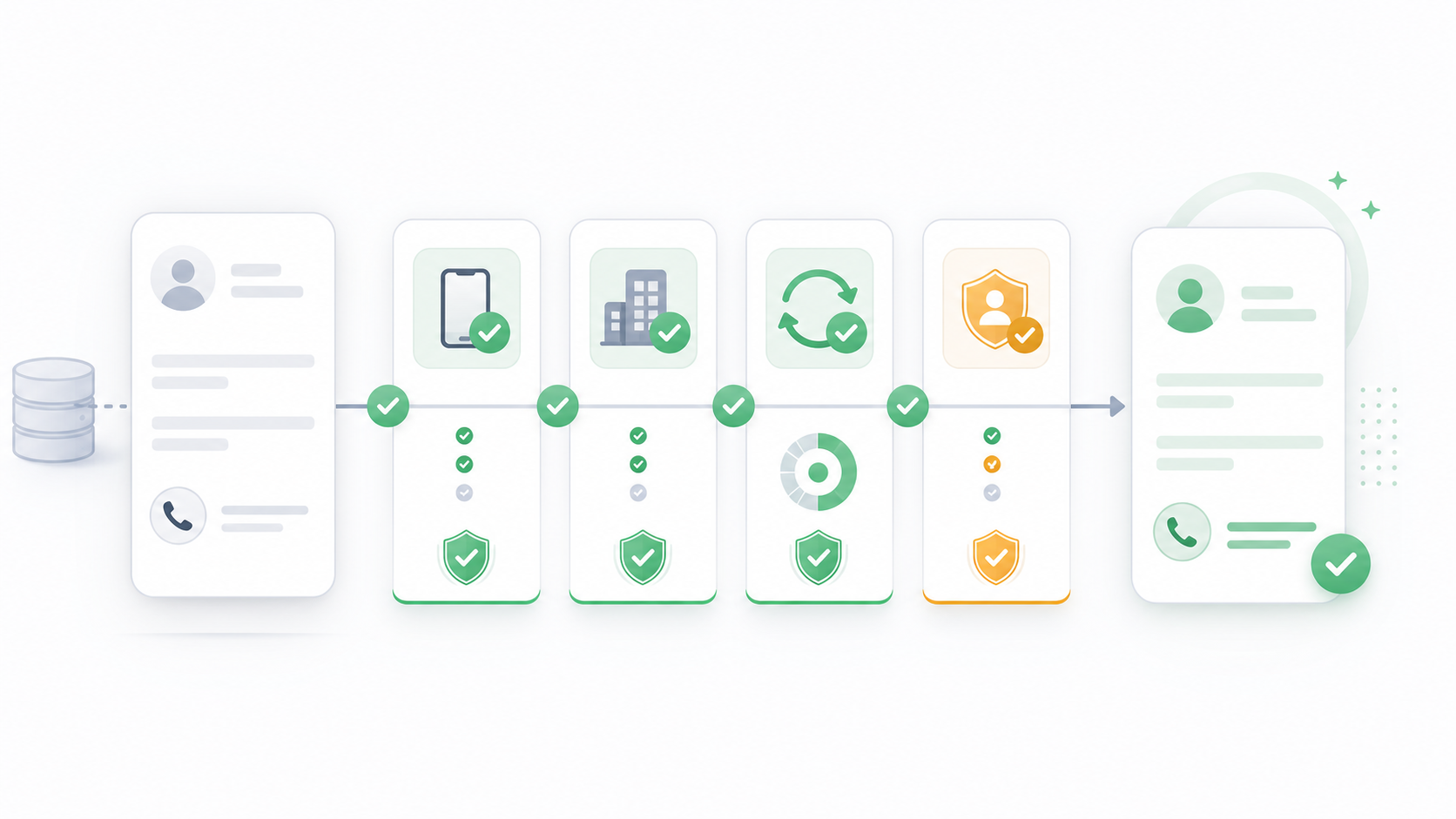
1. Accuracy
The number should actually connect to the intended person, team, or business context. Old or misassigned numbers waste time and create bad experiences.
Accuracy is not only about whether the number exists. It is about whether the number is useful for the specific sales workflow.
Ask:
- Is this number connected to the right person or role?
- Is it a personal mobile, office line, department line, or company main line?
- Does the CRM show when it was last verified?
- Is there another channel that is more appropriate?
2. Freshness
People change roles, companies, and contact preferences. A direct dial that was useful a year ago may be wrong today.
Freshness should be visible in the record. A sales team should not have to guess whether the number came from a recent enrichment, a stale import, or an unknown legacy source.
For contact databases, freshness is one of the most important trust signals. Workbase exposes database and coverage context through pages like data enrichment and our data, but the principle applies to any sales stack: contact data should have a visible quality state.
3. Context
A direct dial is much more valuable when it sits next to the rest of the contact context:
- name and role
- company and industry
- account owner
- previous conversations
- email address
- source
- lead status
- suppression state
- last activity
Without context, the number creates manual work. The seller still has to decide who the person is, why they matter, whether they should be contacted, and what should happen afterwards.
4. Compliance and suppression
Sales teams need to respect applicable laws, consent rules, internal policies, and suppression requests. Requirements vary by region and use case, so the system should not encourage a simplistic “number found, call now” workflow.
A safer approach is to make suppression and review states part of the record. If a person or company should not be contacted, the workflow should make that visible before outreach happens.
This is especially important when direct dials are used together with automated workflows. Automation should make the review state clearer, not hide it.
How direct dials fit into CRM workflows
The best use of direct dial phone numbers is not a spreadsheet export. It is a CRM-connected workflow.
A practical flow looks like this:
- A lead or account enters the CRM.
- The system checks whether key contacts are missing direct contact options.
- Contact data is enriched where appropriate.
- The record shows source, freshness, and contactability state.
- The owner receives a clear next step.
- Outreach is logged back into the CRM.
- Reply, no-answer, or suppression outcomes update the record.
That makes direct dial data part of the sales operating system, not a separate research task.
Common mistakes
Using direct dials without a reason to call
The presence of a number does not create relevance. The team still needs a business reason, a useful message, and a clear fit.
Treating all numbers the same
A mobile number, office line, department line, and main switchboard are not equal. The record should make the type and reliability of the number clear.
Ignoring stale data
Old direct dials can be worse than no direct dials because they create false confidence. Freshness should influence whether the workflow suggests a call, another channel, or a verification step.
Separating data from follow-up
If the number lives in one tool and the follow-up lives in another, the seller has to bridge the gap manually. Direct dials are more useful when they are connected to tasks, inbox context, and CRM updates.
Article and page ideas around direct dial data
If you are building a content strategy around this topic, direct dial numbers should not be a single isolated article. They belong to a broader B2B contact data cluster:
- direct dial phone numbers
- business mobile numbers for sales
- how to verify B2B contact data
- email finder versus phone number finder
- contact enrichment for CRM records
- data freshness in outbound sales
- B2B contact database quality checklist
This cluster can support product pages around contact data, enrichment, CRM cleanup, and outbound workflows.
Bottom line
Direct dial phone numbers can help B2B sales teams reach the right people faster. But they only create value when the team also has context, freshness, compliance awareness, and a clear workflow for what happens next.
The practical goal is not just to find a number. The goal is to turn an incomplete or hard-to-use record into a contactable, reviewable, and accountable sales workflow.
Frequently Asked Questions
Find quick answers to common questions related to this article.
What are direct dial phone numbers?
Direct dial phone numbers are phone numbers that help reach a specific business contact or department more directly than a generic company switchboard.
Are direct dial numbers enough for outbound sales?
No. They are only useful when the record also includes role context, company fit, source quality, freshness, and a clear reason to contact the person.
What should teams check before using direct dial data?
Teams should check data accuracy, freshness, suppression status, regional compliance requirements, CRM ownership, and whether calling is appropriate for the relationship.
Can't find what you're looking for? get started with Workbase